
The Benefits of Outdoor Time for Seniors in Assisted Living
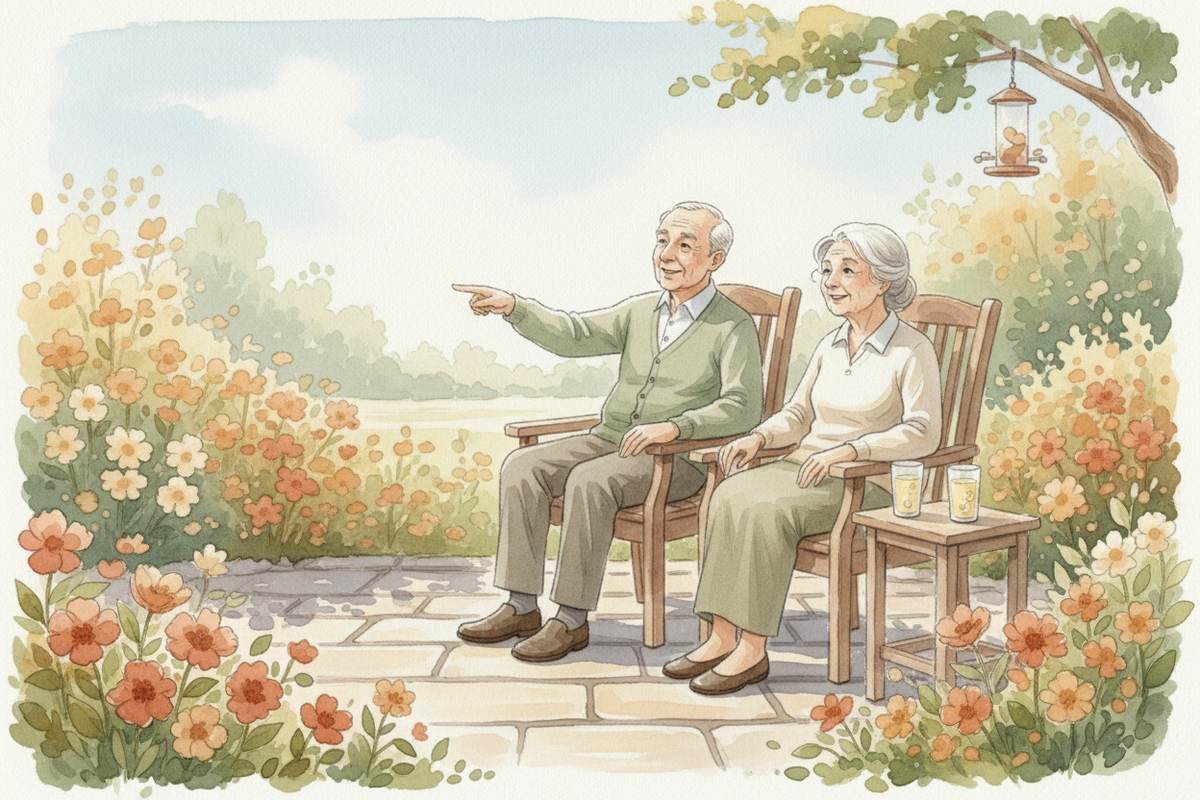
There is a moment that happens almost every spring at Herbmoor House. The weather turns, the patio door opens, and a resident who has spent months bundled up inside takes that first breath of warm Michigan air and just stops. They close their eyes. They smile. And for a few seconds, whatever pain or confusion or sadness they have been carrying seems to lift.
I have seen this happen enough times that I have stopped being surprised by it. But I have never stopped paying attention to it, because it tells me something important about what outdoor time actually means for the people in our care.
What the Patio at Herbmoor Teaches Us
Herbmoor House has a covered patio out back that gets afternoon sun. It is nothing fancy — some comfortable chairs, a table, a few planters that our staff keeps stocked with seasonal flowers. But that patio has become one of the most important spaces in the house.
On a good weather day, you will find two or three residents sitting out there after lunch. One of our residents, a retired teacher, likes to bring a crossword puzzle and work on it with whoever sits down next to her. Another gentleman prefers to just sit quietly and watch the birds. He does not say much, but his whole body relaxes out there in a way it does not inside.
What I have learned from watching this over the years is that outdoor time is not a recreational add-on. It is not something we schedule because it sounds nice on a brochure. For many of our residents, it is the part of the day that keeps everything else working.
Why It Matters More Than People Realize
When a senior moves into assisted living, they lose a lot of the casual outdoor exposure that most of us take for granted. They are no longer walking to the mailbox, sitting on their own front porch, or puttering around the yard. That loss adds up. Without regular time outside, sleep gets worse. Mood drops. Appetite fades. The body and the mind start to close in.
Sunlight is part of it. Natural light regulates the body's internal clock, and we see a real difference in how well residents sleep when they have spent even twenty or thirty minutes outside during the day. Residents who get regular outdoor time tend to sleep more soundly at night, wake up in better spirits, and eat more consistently. It is not complicated science. The body needs daylight the way it needs food and water.
But it is more than just the sun. Being outside changes the pace of things. Inside the house, even in the most comfortable setting, there is a sameness to the environment. The same walls, the same furniture, the same sounds. Step outside and everything shifts. There is wind. There are birds. The light changes. A car drives by. A neighbor waves. These small inputs matter for a brain that is not getting the stimulation it used to.
For residents with memory loss, this is especially true. We have noticed that outdoor time often produces a kind of calm that is hard to achieve any other way. A resident who has been agitated or confused will sometimes settle completely after ten minutes on the patio. We do not always know why, but we know it works.
Walks at the Daley Home
The Daley Home on Daley Drive has a different outdoor setup. The street is quieter and the neighborhood is flat, which makes it good for short walks. Our caregivers take residents on walks around the block when the weather cooperates — slow, unhurried loops where the point is not exercise but presence.
One of our residents there used to walk two miles a day before she moved in. She cannot do that anymore, but she can do a lap around the cul-de-sac with a caregiver at her side, and she lights up every time. She points out the same things — that house with the red door, the big oak tree on the corner — and our staff points them out right along with her, every single time, because the joy she gets from it is real even if the observation is repeated.
These walks are not therapy in any clinical sense. But they are therapeutic. They remind residents that the world is still out there, that they are still part of it, and that their body can still carry them through a beautiful afternoon.
Seasonal Rhythms
Living in Troy means we get all four seasons, and each one brings something different to outdoor time.
Spring is the easiest. The air warms up, the trees leaf out, and residents are eager to get back outside after the long Michigan winter. We open the patio doors as soon as the weather allows and keep them open as much as we can.
Summer means adjusting for heat. We stick to mornings and late afternoons, make sure everyone has water, and use the shaded areas. Some of our residents grew up in this area and remember summers without air conditioning, so they handle the heat better than you might expect. But we watch closely. Seniors are more vulnerable to overheating, and we do not take chances.
Fall is probably the favorite season at both houses. The trees in Troy turn gorgeous in October, and the air has that crispness that makes everything feel sharper. We have had family members from Birmingham and the surrounding area time their visits for fall specifically because the outdoor spaces look so inviting.
Winter is the hardest. There are days and sometimes weeks where going outside is not realistic. When that happens, we bring the outside in as much as we can — opening blinds for natural light, keeping plants in the common areas, playing nature sounds for residents who respond to them. But nothing fully replaces the real thing, and every year we count the days until the patio opens again.
The Part That Does Not Fit in a Care Plan
There is a resident at Herbmoor House who does not talk much anymore. Her dementia has progressed to the point where conversation is difficult and she spends a lot of her day in a quiet kind of withdrawal. But when we take her outside — when she feels the sun on her arms and hears the wind move through the trees — she hums. It is the same melody every time, something none of us can identify, and it only happens outdoors.
That humming is not in her care plan. There is no checkbox for it. But it tells us that something inside her is still responding to the world, and that the world she responds to most is the one outside the walls of the house.
This is what outdoor time does at its best. It reaches the parts of a person that routine care cannot always touch. It is not medicine. It is not treatment. It is something older and simpler than that — a human being in fresh air, under open sky, feeling alive.
If you are looking for assisted living in the Troy area and the outdoor experience matters to you, come see our homes. Sit on the patio at Herbmoor. Walk the block at the Daley Home. You will understand why we think of outdoor time not as a perk but as a necessity.
Call us at (248) 266-2738 or email troygoldenpines@gmail.com to schedule a visit.