
What Are the Different Types of Adult Foster Care Homes in Michigan?
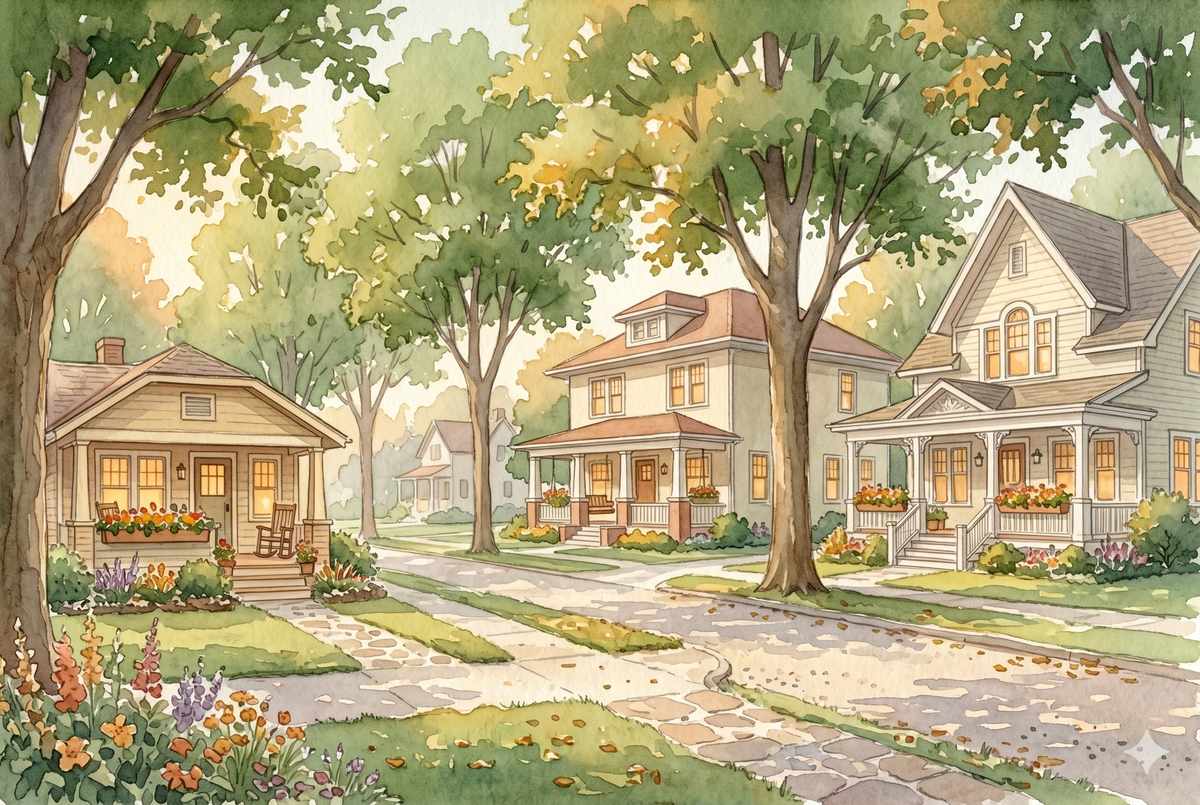
If you've started researching senior care in Michigan, you've probably noticed that the language is different here than in other states. National articles talk about "assisted living facilities." Michigan licensing documents call them "adult foster care homes". Brochures from larger care chains use both terms interchangeably. Smaller residential homes use the phrase "adult foster care," sometimes shortened to AFC.
The difference isn't just words. Michigan licenses adult foster care under a specific statute, with specific categories that determine what kind of home a facility is: how many residents it can have, who must live there, what kind of supervision it provides, and what level of care is permitted. Understanding the categories helps families understand what they're actually looking at when they tour a home.
Here is how Michigan's adult foster care system is organized, what each category of home is, and how to think about which kind fits which kind of resident.
Why Michigan Calls Them "Adult Foster Care" Instead of "Assisted Living"
Most states have a separate license category called "assisted living." Michigan does not. The state regulates residential senior care under one statute, the Adult Foster Care Facility Licensing Act, PA 218 of 1979, administered by the Bureau of Community and Health Systems within Michigan's Department of Licensing and Regulatory Affairs (LARA).
What most other states call "assisted living," Michigan calls "adult foster care." The terminology is regulatory, not descriptive of quality. An adult foster care home in Michigan can be a six-bed home in a residential neighborhood with a family-style atmosphere, or it can be a much larger building with a corporate operator and a marketing department that uses the term "assisted living." The state license category is the same.
This is why families in Troy or anywhere in Michigan often get confused when comparing options. A facility called Sunshine Assisted Living Community may be licensed as the same kind of adult foster care home as Aunt Mary's Care Home down the street. The license tells you the legal framework. It does not tell you the size, atmosphere, or kind of care.
The state recognizes four different categories of adult foster care homes. Capacity is part of what separates them, but it is not the whole of it, and the two smallest categories overlap in size, which is the detail almost every summary of this gets wrong. We come back to that below.
The Four Adult Foster Care License Types
The four types of adult foster care home in Michigan are:
- AFC Family Home: 3 to 6 residents in a private residence; the licensee lives in the home
- AFC Small Group Home: 3 to 12 residents; the licensee need not live in the home
- AFC Large Group Home: 13 to 20 residents
- AFC Congregate Facility: 21 or more residents
Each type has different rules around staffing, recordkeeping, fire safety, and physical plant. All four operate under the same general statute and the same basic resident protections. The differences families notice most are not regulatory; they're practical.
Adult Foster Care Family Home
An adult foster care Family Home is the smallest license type. The statute gives it an approved capacity of at least three and not more than six adult residents. The licensee (the person legally responsible for the home) must live in the home.
In practice, adult foster care Family Homes are typically run by a couple or a single caregiver who has converted their own home into a licensed care setting. The licensee provides the care personally, sometimes with one or two additional caregivers helping out during peak hours. The home looks like a house because it is one: a kitchen, a living room, bedrooms for residents.
The Family Home category is well-suited to residents who would benefit from a deeply home-like setting, in which they are essentially living with another family. It works less well for residents whose care needs are heavy enough to require multiple full-time caregivers, because by license, only one licensee lives in the home.
Adult Foster Care Small Group Home
An adult foster care Small Group Home licenses a residence for at least three and not more than twelve adult residents. Unlike the Family Home category, the licensee does not have to live in the home.
Those two ranges overlap, and the overlap is the point rather than a drafting accident. A home with four residents could be licensed either way. What separates the categories is not how many people live there but whether the licensee lives there too: the statute requires the Family Home licensee to be "a member of the household and an occupant of the residence." So if you are comparing two small homes of the same size, the license type is telling you something about who runs it, not about how big it is. The license can be held by an individual, a partnership, a limited liability company, or another business entity.
This is the category Golden Pines homes fall under. Our two homes, Herbmoor House in Troy 48098 and Daley Home in Troy 48083, are licensed as Adult Foster Care Small Group Homes. Within this license category, the maximum capacity is twelve, but many operators of small residential homes choose to care for fewer residents than the maximum, to keep the setting genuinely home-like.
Small Group Homes tend to occupy single-family homes that have been adapted for care: wider doorways, walk-in showers with grab bars, a bedroom configuration that gives each resident a private or semi-private room. They look from the outside like residential homes, often in residential neighborhoods. From the inside, the difference between a Small Group Home and an ordinary house is the layout for accessibility and the presence of trained caregivers.
The category sits between the Family Home (very small, owner-occupied) and the Large Group Home (more residents, larger staff). For families looking for genuinely residential care at a slightly larger scale than the Family Home category permits, Small Group Homes are often the right match.
Adult Foster Care Large Group Home
An adult foster care Large Group Home permits thirteen to twenty adult residents. The home typically operates with a larger staff and a more formal organizational structure than a Small Group Home: a director, multiple caregivers per shift, sometimes a nurse on call. The physical plant is larger, often a purpose-built or substantially renovated facility.
Large Group Homes can offer more amenities than smaller homes: sometimes a dedicated activity room, a courtyard, a more developed activities program. They tend to feel less like a household and more like a small care community. Some families prefer this. Some don't.
The license rules around staffing, fire safety, and physical plant become more involved at this size. Large Group Homes are still residential in feel compared to Congregate Facilities, but they sit on the threshold of an institutional environment.
Adult Foster Care Congregate Facility
An adult foster care Congregate Facility licenses twenty-one or more residents, sometimes many more. Congregate facilities are large multi-resident buildings that look and operate more like what most people picture when they hear "assisted living facility." Multiple wings, dining rooms, common areas, salons, libraries, organized activities, professional management.
The rules for Congregate Facilities reflect their scale: more required staff, more formal medication management procedures, more involved emergency planning. The atmosphere is institutional by necessity, because a building this size cannot run like a household. Some families prefer this environment for the amenities, the social activity, and the larger staff coverage. The trade-off is in atmosphere: a larger setting can offer amenities and staffing depth that a smaller home cannot, at the cost of the home-like feel that many families look for in smaller settings.
A Different License: Home for the Aged
Some Michigan senior care settings are licensed as a Home for the Aged rather than under the adult foster care statute. Homes for the Aged are licensed under a different law, Michigan's Public Health Code, PA 368 of 1978, with its own set of licensing rules.
The two categories are not overlapping shades of the same thing. The Public Health Code, at MCL 333.20106(3), defines a home for the aged as a supervised personal care facility at a single address providing room, board, and supervised personal care to 21 or more unrelated, nontransient individuals aged 55 or older, and that definition expressly excludes an adult foster care facility. A home holds one licence or the other, never both.
The practical read for a family is short. A small house in a residential neighborhood is an adult foster care home, because a home for the aged cannot be that small unless it is run as a distinct part of a licensed nursing home. Above about twenty residents, either licence is possible, and the label alone stops telling you much. At that point what the home is actually like, how it is staffed, and what care it is permitted to provide matter more than the words on the certificate.
What Size Home Fits What Kind of Resident
Different resident situations are better served by different home sizes. Some general patterns:
A parent who is highly social, wants a busier environment, enjoys group activities and a more developed amenities program often does well in a Large Group Home or a Congregate Facility. The larger resident base means more social opportunities, more organized activities, and a more populated environment.
A parent who is reserved, prefers quieter settings, has dementia and benefits from predictable routines with familiar caregivers often does best in a Family Home or Small Group Home. The smaller resident count means less stimulation, fewer transitions, more continuity in who is around them.
A parent with significant care needs (advanced dementia, post-stroke recovery, mid-to-late-stage Parkinson's) who needs a high level of attention can be served well in any size home, depending on the home's specific capabilities. The license category alone doesn't tell you whether a particular home can handle a particular case. That requires a proper assessment.
A parent who values privacy and the feel of a real home typically does best in a Family Home or Small Group Home, where the building is in fact a home, not a facility.
There is no single best license category. The right home is the one that fits the resident, the family's expectations, and the practical realities of care.
Why the License Distinction Matters for Families
For most families touring senior care options, the most useful question isn't "what license category is this home?" It's "how many residents do you have, and what does daily life here look like?" The numbers tell you most of what the license category would have told you anyway.
But knowing the categories exist matters when:
- You're comparing very different settings (a six-resident home and a hundred-resident facility) and want to understand why they feel so different.
- You're reading marketing materials that use terms like "assisted living" interchangeably with adult foster care, and you want to know what the legal framework actually is.
- You're considering whether a small residential home is the right environment for your parent, and you want to know what category of home it falls under and what that means.
The Michigan adult foster care system is set up to provide options at different scales. The differences in scale produce real differences in atmosphere, care continuity, and family experience, even when the underlying license framework is the same.
For families in Troy and the broader Oakland County area, the choice of category is often one of the most important early decisions in the senior care search. The license type doesn't determine quality. But it does shape the kind of life your parent will be living, day to day, for the years they are in care.