
The Questions Families Forget to Ask When Touring Assisted Living
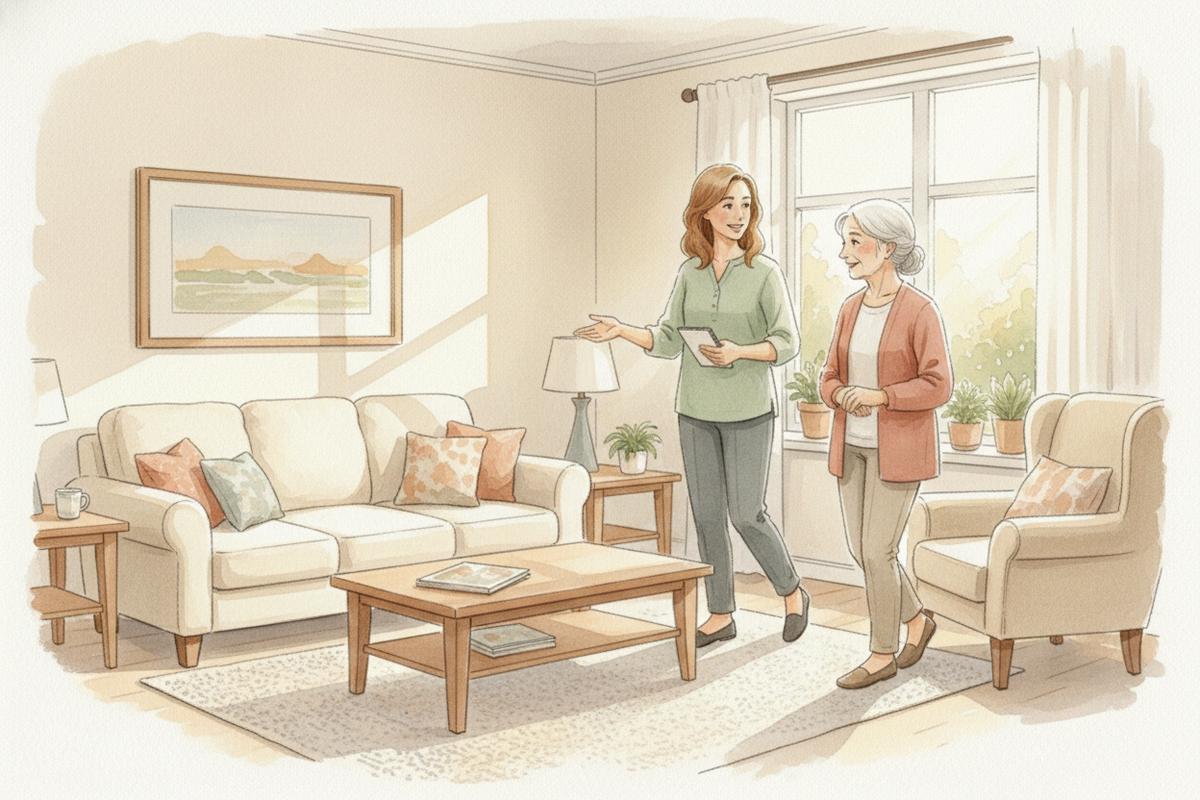
When families tour an assisted living home, they almost always ask the same questions. How much does it cost? What is included? Is there a waiting list? These are fine questions. They are the obvious ones. But after watching hundreds of families go through this process, I can tell you that the questions that matter most are the ones people forget to ask.
I am going to give you those questions. Not because I want to make the process harder, but because I want you to get an honest picture of any place you visit — ours included.
Who Will Be Taking Care of My Parent?
Not which company. Not which credential. Which actual person will be in the room with your mother at seven in the morning when she needs help getting dressed?
Ask to meet the caregivers. Not the marketing person. Not the administrator. The people who do the daily work. Watch how they move through the house. Do they know the residents by name? Do they seem rushed? Are they warm or are they just going through the motions?
In a large facility, the staff rotates. You might meet a wonderful caregiver on your tour who works a different wing and will never interact with your parent. In a small home, you are meeting the team. There is no other wing.
This is the single most important thing, and most families do not ask about it until after they have already moved their parent in.
What Is the Staff-to-Resident Ratio — and Is It Real?
Every facility will give you a number. Five to one. Eight to one. Whatever it is, ask a follow-up: is that the ratio right now, on this shift, or is that an average across all shifts including nights?
Because here is what happens. A place might tell you the ratio is six to one. But on the overnight shift, it is twenty to one because staffing is thinner. During a busy afternoon, a caregiver might be pulled to help with an admission or a medical issue, and suddenly the ratio is worse than advertised.
In a small home like ours, the ratio is simple to verify. You can count the residents. You can count the staff. There is nowhere to hide.
What Happens When My Parent Has a Bad Day?
This is the question nobody asks, and it is the most revealing one. Every home can show you the good days. The dining room with fresh flowers. The activities board. The smiling photos.
But what happens when a resident is agitated? When someone refuses to eat? When a person with dementia becomes upset and scared at two in the morning?
Ask this question directly. If the person giving the tour hesitates or gives a vague answer about "trained professionals" and "de-escalation techniques," you have learned something. If they tell you a specific story — "Last week, one of our residents was having a tough evening, and our caregiver sat with her in the living room and played her favorite music until she calmed down" — you have learned something else.
The bad days are the test. Any home looks good on the best days.
Can I Visit Unannounced?
This should be a simple yes. If a home hesitates, or talks about visiting hours, or asks you to call ahead every time, pay attention. A place that is doing good work has nothing to hide at ten in the morning on a random Tuesday.
At Golden Pines, families come whenever they want. No appointment needed. Some of our best visits have been the unplanned ones — a daughter stopping by on her way home from work, a grandchild coming after school. If a home is only comfortable with scheduled tours, ask yourself why.
How Long Has the Staff Been Here?
Turnover tells you everything. If the caregivers have been there for years, it means they are paid fairly, treated well, and care about the work. If the staff is mostly new, it means people keep leaving, and that instability flows directly into the quality of care.
Ask this question. You will get an honest answer or an evasive one, and both are informative.
What Is Not Included in the Price?
The monthly cost families are quoted often does not include everything. Medications, incontinence supplies, higher levels of care, transportation to appointments — these might be extra. Some places charge a community fee or an admission fee on top of monthly costs.
Get the real number. Not the starting price, the actual number you will be paying six months from now when your parent's needs may have changed. Ask what happens to the cost if your parent needs more help over time. Does the price go up? By how much? Who decides when a higher level of care — and a higher cost — kicks in?
We try to be straightforward about this at Golden Pines because I have seen too many families blindsided by costs they were not told about upfront.
What Is the Food Like — Can I Try It?
Do not just ask about the food. Ask to eat a meal. If a home will not let you sit at the table during dinner, that tells you something. If the food comes from a central kitchen and gets reheated, you should know that. If it is cooked fresh in the home, you should see that too.
We have had families from Auburn Hills and all across Oakland County come for a visit during dinnertime, sit at the table, eat with the residents, and leave with a clearer picture of what daily life looks like than any brochure could give them.
What Does a Typical Day Actually Look Like?
Not the activities calendar. The actual day. What time do people wake up? Is there flexibility, or does everyone follow the same schedule? What do residents do between meals? Is the television on all day? Is there outdoor space? Do people actually use it?
Ask to stay for a while. Sit in the living room for thirty minutes and observe. You will learn more from watching than from asking, and a good home will have no problem with that.
Take Your Time
Touring assisted living homes is exhausting. Every place starts to blur together after a while. But the right questions cut through the noise. They separate the places that are performing for your visit from the places that are just living their normal day and letting you see it.
We would rather you come to Golden Pines with hard questions and leave with honest answers than come with easy questions and leave with a brochure. That is how you find the right home — not just for your parent, but for your family.
Our homes are at 6131 Herbmoor St and 3178 Daley Dr in Troy, Michigan. Call (248) 266-2738 or email troygoldenpines@gmail.com to arrange a visit.