
What We Have Learned from Caring for Residents with Dementia
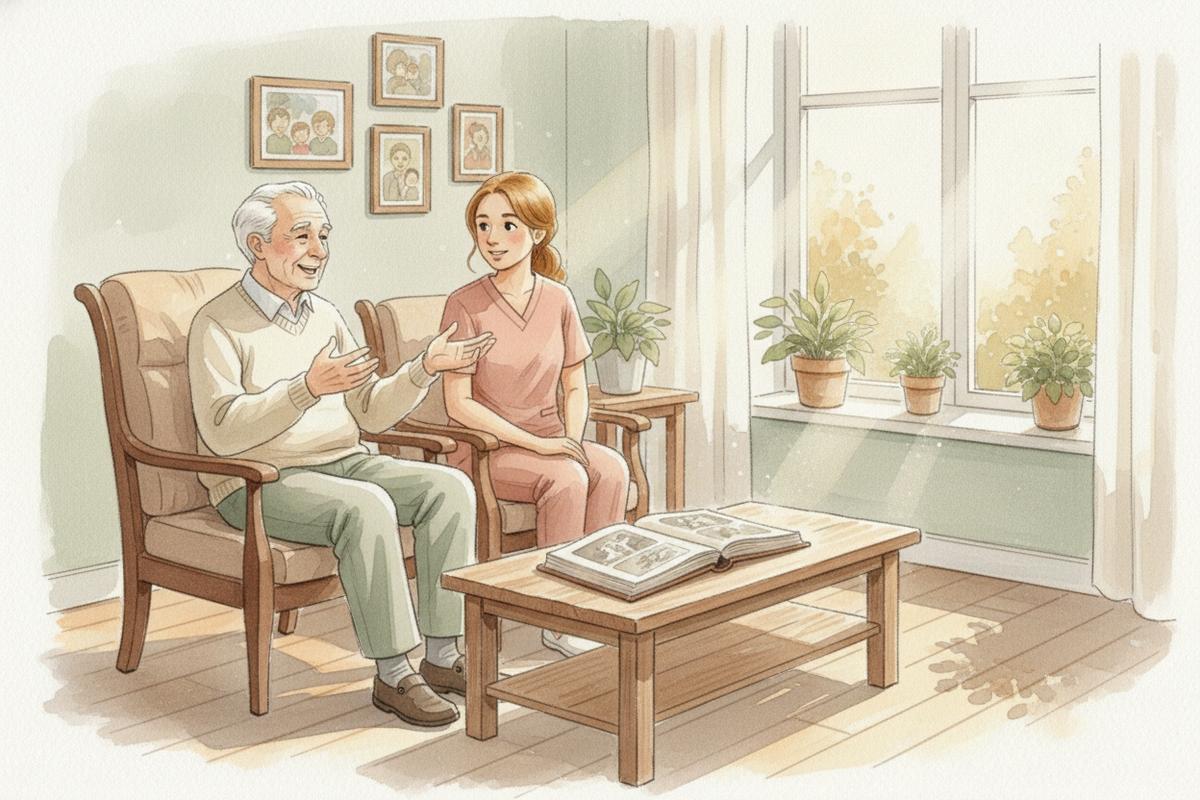
I have read the articles. I have sat through the training sessions. I know what the textbooks say about dementia — the stages, the terminology, the clinical trajectory. And I can tell you that almost none of it prepared me for what this work actually looks like day to day.
What prepared me was being in the room. Sitting with residents through their good hours and their frightened ones. Watching families learn to communicate in new ways. Making mistakes and adjusting. Doing this work year after year in our homes in Troy until the patterns became clear — not the clinical patterns, but the human ones.
Here is what we have learned. These are not things you will find in a medical pamphlet, but they are the things that have shaped how we care for people.
The Person Is Always in There
This is the most important thing we have learned, and it is the thing families need to hear most. Dementia changes behavior. It erodes memory. It makes communication difficult and sometimes impossible. But it does not erase the person.
We had a resident who could not tell you what day it was or where she lived. But every time someone played Frank Sinatra, she closed her eyes and swayed and mouthed every word. She had been a dancer in her twenties, and that part of her was still alive even when so much else had faded. Her daughter cried the first time she saw it — not from sadness, but from relief. Her mother was still in there.
We have seen this pattern so many times that it has changed how we approach care entirely. We do not treat dementia as an absence. We treat it as a rearrangement. The person is still present, but the ways they can express themselves have changed. Our job is to find the channels that still work — music, touch, humor, food, routine — and keep those channels open.
A gentleman in our care could not carry on a conversation for more than a few sentences. But he could tell you every tool in a mechanic's toolbox and what it was for. He had been an auto mechanic in the Troy area for forty years. When our staff learned this, they started asking him about cars. He would light up. He would explain things with clarity and confidence that vanished the moment the topic changed. That knowledge was not gone. It was just locked behind a door that needed the right key.
Routine Is Not Boring — It Is Stabilizing
When I started this work, I thought routine was the enemy of quality care. I thought good care meant variety, stimulation, new experiences. I was wrong.
For a person with dementia, routine is a lifeline. When the internal world becomes unreliable — when you cannot trust your own memory to tell you where you are or what time it is or who the person next to you is — the external world needs to be steady. The same chair. The same meal time. The same face helping you get dressed in the morning. The same walk after lunch.
We build routines around each resident's natural rhythms, not around an institutional schedule. If a resident always wakes up early, we do not try to change that. If someone gets anxious in the late afternoon, we know that, and we adjust the environment before the anxiety sets in. If a particular caregiver has a calming effect on a particular resident, we make sure that caregiver is present during the hardest parts of the day.
This is not something you can do in a large facility with rotating staff. It requires a small environment and consistent caregivers who know each person well enough to read the room without being told. That is what we have built at Herbmoor House and the Daley Home.
Sundowning Is Real, and It Changes Everything
If you spend time with people who have dementia, you will notice a pattern that repeats almost every day. The morning is calm. The afternoon is manageable. And then, somewhere around four or five in the evening, something shifts. Confusion deepens. Agitation increases. A resident who was pleasant and cooperative at lunch becomes restless, fearful, or even combative by dinner.
This pattern is called sundowning, and it affects a significant number of people with dementia. The causes are not fully understood — it may be related to fatigue, changes in light, disruption of the internal clock, or some combination. What we know from experience is that it is predictable and it is manageable, but only if you are paying attention.
Our approach to sundowning is preventive. We keep the afternoons calm. We reduce noise. We make sure the lighting in the house stays warm and consistent as the natural light fades. We redirect residents who are starting to show signs of agitation before the agitation escalates. A short walk, a cup of tea, a familiar song — these small interventions work far better than trying to manage a full episode after it has started.
Families are often surprised when we talk about sundowning because no one told them about it. Their parent was fine during the day and then suddenly difficult in the evening, and they assumed it was personal — something they did or did not do. It is not. It is the disease, and knowing that it is coming makes it far less frightening for everyone.
You Cannot Argue with Dementia
This is the lesson that takes the longest to learn, and it is the one that changes family relationships the most.
When a person with dementia says something that is not true — "I need to go pick up the children" when the children are grown, or "My mother is coming to visit" when her mother passed away twenty years ago — the instinct is to correct them. To say, gently or not so gently, that they are wrong. To bring them back to reality.
This does not work. It has never worked, in all the years we have been doing this. Correcting a person with dementia does not restore their sense of reality. It makes them feel wrong, confused, and upset. They do not have the cognitive capacity to integrate the correction, so they are left with nothing but the emotional residue — the feeling that someone just told them something painful, even if they cannot remember what it was.
What works is meeting them where they are. "Tell me about the children." "What is your mother like?" "Where are we going?" These responses honor the reality the person is living in, and they often lead to moments of connection that would be impossible if you were fighting over facts.
We teach this to every family that comes to Golden Pines. Some of them resist it. A husband who has been married to his wife for fifty years does not want to pretend he does not know what year it is. A daughter does not want to play along when her mother asks for someone who is no longer alive. I understand that resistance completely. But the families who learn to enter their loved one's world instead of dragging them back to ours are the ones who find peace in the visits. And the residents can feel the difference.
What Families Do Not Learn from Google
The internet is full of information about dementia. Most of it is accurate in a clinical sense. But there is a gap between clinical knowledge and lived experience, and that gap is where families struggle the most.
Google will tell you the stages of Alzheimer's. It will not tell you that your father might have a moment of perfect clarity in the middle of stage six that makes you think the diagnosis was wrong, and that this moment is normal and does not mean he is getting better.
Google will tell you about behavioral changes. It will not tell you that the anger your mother expresses is almost certainly not directed at you, even when it feels like it is. It is directed at the confusion and the fear and the loss of control that she cannot articulate.
Google will tell you to maintain a routine. It will not tell you that the right routine — the one that actually calms your loved one — might take weeks to discover and will change as the disease progresses.
These are the things you learn by being present. By caring for people day after day in a small home where you can see the details. By making mistakes and adjusting. By loving people through the hardest version of themselves.
We have been doing this in Troy for years, working with families from West Bloomfield, throughout Oakland County, and beyond. Every resident teaches us something new. Every family adds to what we know. And the longer we do this, the more certain we become that the most important thing in dementia care is not expertise. It is attention.
If Your Family Is on This Path
Dementia is a long road, and no family should walk it alone. Whether your loved one was just diagnosed or has been living with the disease for years, we are here to help — not just with care, but with the questions and the fears and the moments when you do not know what to do next.
Call us at (248) 266-2738 or email troygoldenpines@gmail.com. We will tell you what we know, honestly, and we will help you figure out the next step.