
What Memory Care Really Looks Like
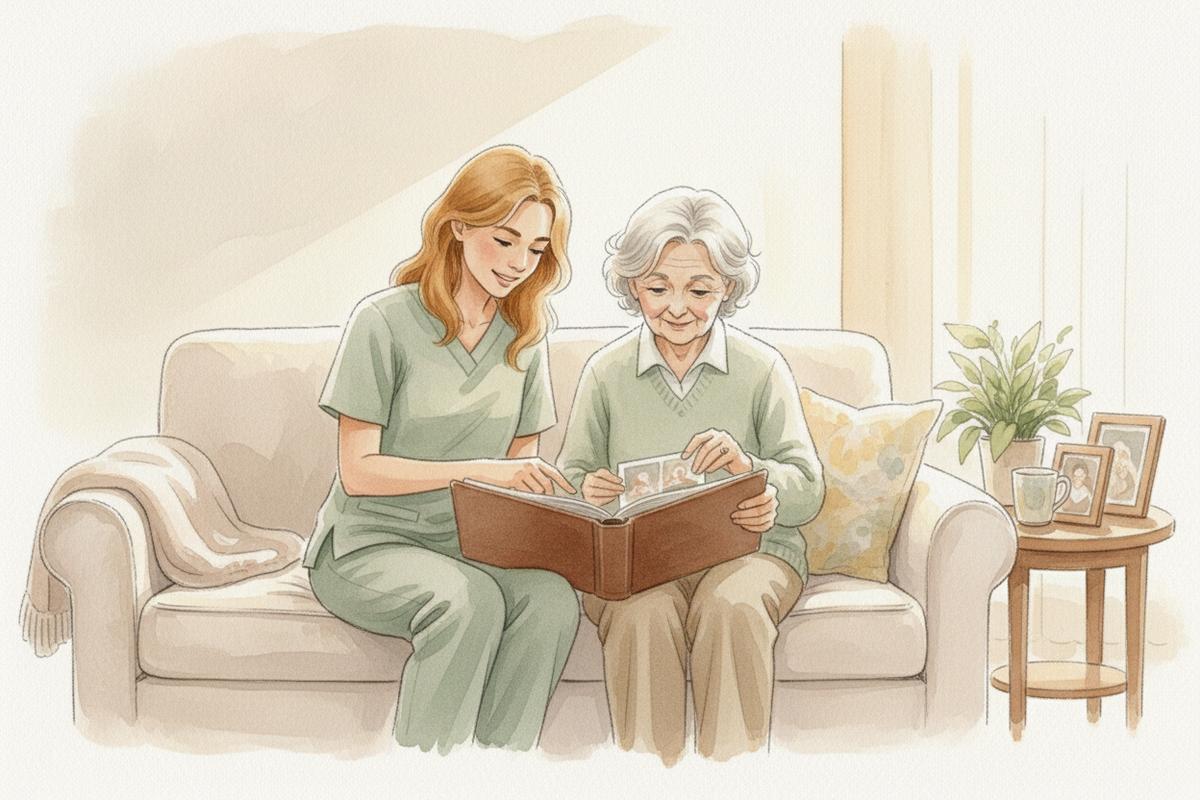
The words memory care scare people. I understand why. When you hear that your parent or your spouse needs memory care, your mind goes to locked wards and blank stares and a version of the future you are not ready for.
I want to tell you what memory care actually looks like. Not the version in your head. The version we live with every day in our homes in Troy.
It Does Not Look Like a Hospital
I think the biggest misconception about memory care is that it happens in a clinical setting. Nurses in scrubs. Long corridors with numbered doors. A television playing in an empty common room. That image comes from movies and from the worst examples of institutional care, and it sticks because fear has a long memory.
What it looks like here is a house. A living room with a couch and a television and a window that gets good afternoon light. A kitchen where someone is making lunch. Bedrooms down the hall with family photos on the dresser and a quilt from home on the bed. A caregiver sitting at the table with a resident, not charting on a clipboard but having a conversation — or just sitting together, which is sometimes what the person needs most.
Memory care in a small home is not a separate wing. It is woven into the fabric of daily life. A resident with dementia eats at the same table as everyone else. They sit in the same living room. They go outside on the same patio. The difference is in the attention — the caregiver who notices that Mrs. Palmer is getting agitated and knows from experience that a short walk to the sunroom and a cup of tea will settle her down. That kind of knowing does not come from a training manual. It comes from being present, consistently, in a space small enough to actually see the person in front of you.
What We Actually Do
Memory care is not one thing. It is a hundred small things, done consistently, adapted to the person.
We maintain routines. People with dementia do better when the structure of their day is predictable. Breakfast happens in the same place. The afternoon follows a familiar rhythm. Bedtime is gentle and unhurried. We do not do this because it is convenient for us. We do it because when the world inside someone's mind is becoming less reliable, the world around them needs to stay steady.
We redirect rather than correct. When a resident asks for someone who passed away years ago, we do not say, "Don't you remember? She's gone." That is cruel, even if it is true. We meet them where they are. "Tell me about her. What was she like?" Sometimes the resident lights up and talks for ten minutes. Sometimes they move on to something else. Either way, they have not been hurt.
We watch for changes. Dementia is not a straight line. A resident may have a good week followed by a difficult day. They may suddenly stop eating well or become more confused in the evening — a pattern called sundowning that we see often. Because our staff knows each resident so well, we catch these shifts early. We adjust. We communicate with the family. Nobody is left wondering what is going on.
Memory Care vs. Assisted Living — Is There a Difference?
Families ask us this a lot. The honest answer is: it depends on the setting. In a large facility, memory care is usually a separate unit with its own staff and its own locked entrance. Residents are grouped by diagnosis, and the environment is designed specifically for people with cognitive decline.
In a small home like ours, the line is softer. We provide memory care within the same home, alongside residents who may not have cognitive issues. This works because the ratio of caregivers to residents is so small that everyone gets individual attention regardless of their diagnosis. A resident with Alzheimer's is not separated from the household. They are part of it.
That said, we are honest with families about what we can and cannot handle. If a resident's dementia has progressed to the point where they need a secured environment — where elopement risk is high or behaviors have become unsafe for themselves or others — we will tell the family. We would rather help you find the right next step than keep someone in a setting that no longer meets their needs.
The Part Nobody Talks About
Here is the part that gets left out of most articles about memory care. The person with dementia is still a person. That sounds obvious, but it gets forgotten more than you would think.
Mrs. Yoon still laughs at the same kind of jokes she always did. Mr. Hernandez still hums the same songs. A resident who cannot tell you what year it is can tell you exactly how her mother's kitchen smelled on Sunday mornings. The disease takes things away, but it does not take everything. And in a good care environment, the things that remain are protected and honored.
That is what memory care is supposed to be. Not a warehouse for people whose minds are failing. A place where someone knows them well enough to find the parts that are still there and make sure those parts still get to live.
We work with families from across the area, including West Bloomfield and throughout Oakland County. Many of them came to us terrified of what memory care would mean for their loved one. What they found was not what they expected. What they found was a home.
If You Are Researching Memory Care
Visit. That is the best advice I can give you. Read everything you want online, but then visit. Walk into the home. Watch how the staff interacts with the residents. Pay attention to the noise level, the smell, the pace of the place. You will know within ten minutes whether it feels right.
If you want to see what memory care looks like at Golden Pines, come by. We will show you everything. No appointment necessary, though calling ahead helps. Reach us at (248) 266-2738 or troygoldenpines@gmail.com.