
What Our Residents Actually Eat (and Why It Matters)
One of the first things families ask when they tour our homes is what the food is like. It is a good question — maybe the most important one after safety and staffing — because food is not just nutrition. For seniors, especially those who have been living alone, meals are one of the last reliable sources of comfort, routine, and connection.
So let me tell you what our residents actually eat. Not a menu written for a brochure. What actually happens in our kitchens.
Real Food, Cooked in a Real Kitchen
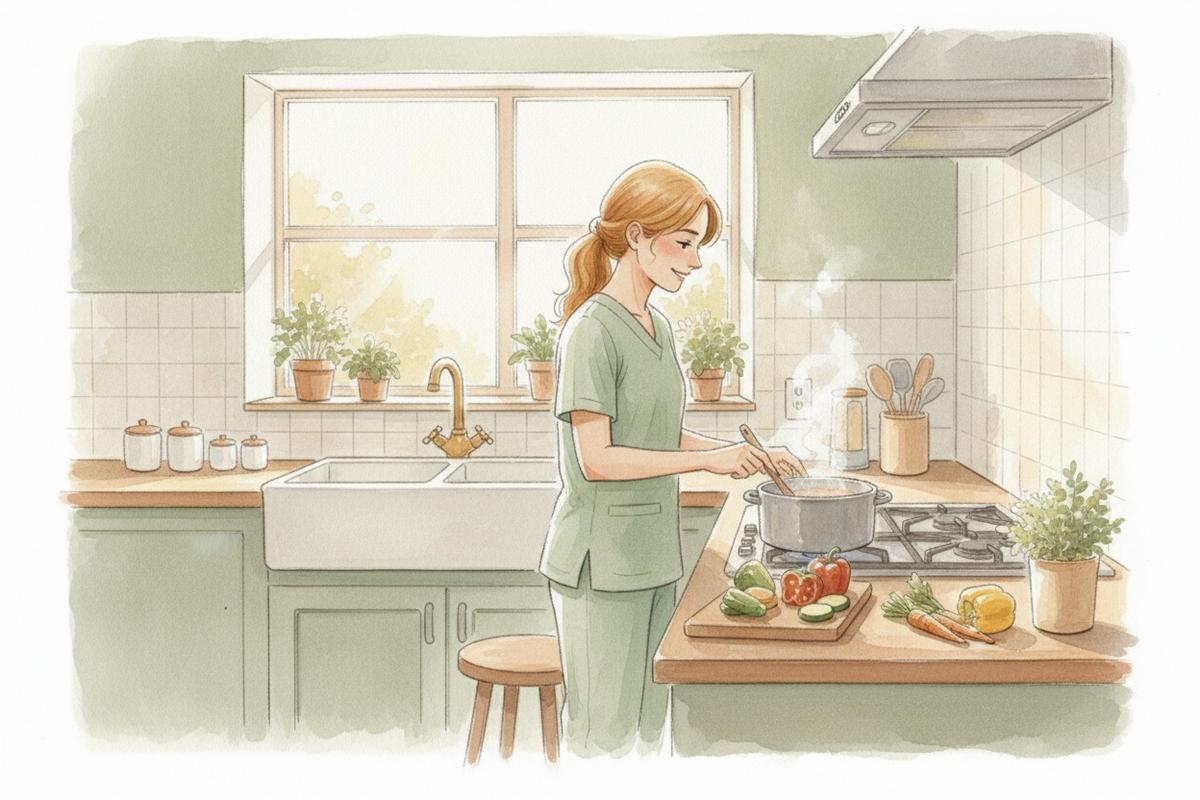
There is no industrial kitchen at Golden Pines. There is no food service company dropping off trays. There is a kitchen in each of our two homes, and our caregivers cook meals there every day, from scratch.
Breakfast might be scrambled eggs with toast and fruit, or oatmeal with berries, or pancakes on a weekend morning when the pace is slower. Lunch is often a sandwich with soup — homemade soup, not from a can. Dinner is the main event: roasted chicken, meatloaf, baked fish, pasta, stews. The kind of food you would cook at home for your own family. Because that is exactly what this is.
We accommodate dietary restrictions and preferences. If a resident is diabetic, their meals reflect that. If someone does not eat pork, we do not serve them pork. If Mrs. Alvarez wants hot sauce on everything, hot sauce is on the table. This is not a cafeteria. It is a home, and people eat what they like.
Why This Matters More Than You Think
Here is something families do not always realize: many seniors who come to us were not eating well before they arrived. Some were skipping meals because cooking had become too difficult or too dangerous. Some were eating frozen dinners every night because grocery shopping was no longer manageable. Some had simply lost interest in food because eating alone, day after day, takes the pleasure out of it.
When a person who has been eating alone in a quiet house sits down at a table with other people, with food that smells like someone actually made it, something changes. They eat more. They eat better. And the social aspect — the conversation, the company, the simple act of passing a dish — does something for their mood and their sense of belonging that no supplement or nutrition plan can replicate.
We have watched residents gain weight in the best possible way after moving in. We have watched people who barely ate start looking forward to meals again. A family from Birmingham once told us that their father had lost fifteen pounds in the six months before he came to Golden Pines because he just was not eating. Within two months with us, he had gained it back and was asking for seconds at dinner. That is what real food and real company can do.
What a Typical Day of Meals Looks Like
Breakfast is served in the morning, but not at a fixed time. Some residents are up at seven. Some sleep until nine. We do not rush anyone. Breakfast is ready when they are.
Lunch is usually around noon. It is lighter than dinner but still a full meal — salads, soups, sandwiches, leftovers from the night before if someone particularly liked what we made.
Dinner is the big meal. It is served family-style at the table, and everyone eats together. This is the meal where conversation happens, where residents catch up on each other's days, where the house feels most alive.
Snacks are available throughout the day. Fresh fruit, crackers, yogurt, cookies. If someone is hungry between meals, they eat. There is no locked kitchen. There is no schedule for when snacking is allowed. It is a house, and the kitchen is open.
The Difference Between Home-Cooked and Institutional
If you have ever visited a large assisted living facility, you may have noticed the food situation. Meals prepared in a central kitchen, portioned onto trays, delivered on a schedule. It is not bad food, necessarily. But it is institutional food. It tastes like it was made for a hundred people, because it was.
In a small home, the food is made for the people sitting at the table. Our caregivers know what each resident likes and does not like. They adjust. They experiment. When something is a hit, they make it again. When something is not, they do not.
This might seem like a small detail in the larger picture of senior care. It is not. Food is how we show care. It is how we create routine. It is how we bring people together. And for a person who has lost much of what used to structure their days, a good meal at a table with people who know their name is not a small thing. It is everything.
Come Eat With Us
We mean that seriously. If you are considering Golden Pines for your loved one, come visit during a meal. Sit at the table. See what it is like. That will tell you more about who we are than anything we could write here.
Our homes are at 6131 Herbmoor St and 3178 Daley Dr in Troy, Michigan. Call (248) 266-2738 or email troygoldenpines@gmail.com to set up a visit.