
When Is It Time for Assisted Living? Signs to Watch For
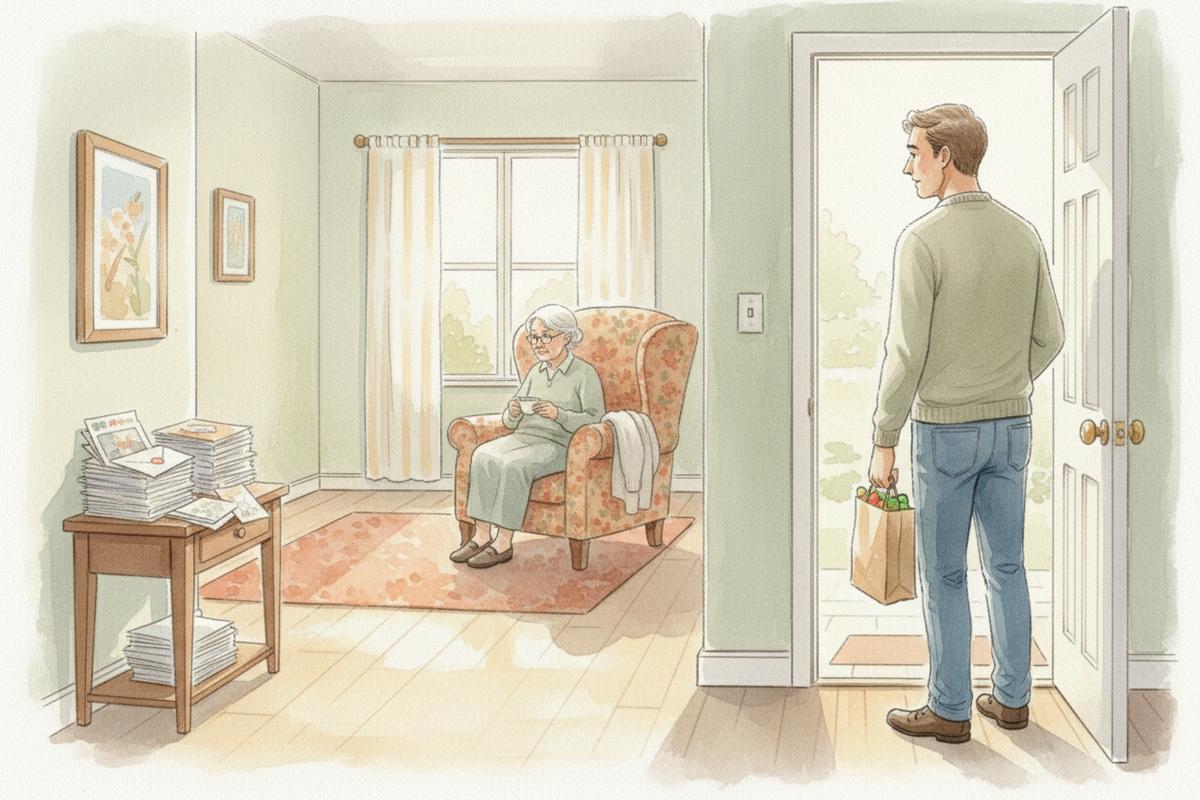
The families who come to us rarely describe a single moment when everything changed. It is almost never a dramatic event. It is a slow accumulation of small things that eventually becomes impossible to ignore.
The expired food in the fridge. The bills piling up on the counter. The call from a neighbor who noticed the front door open at midnight. The bruise on a forearm that nobody can explain. The third fall in two months.
Each thing, on its own, feels manageable. You fix it. You check in more often. You tell yourself it is just aging, it is just a bad week, it will get better. And sometimes it does get better, for a while. But the trend only goes one direction. And at some point, the gap between what your parent can do safely and what daily life requires becomes too wide for family visits and phone calls to bridge.
If you are reading this because you think that point might be approaching, here is what we have learned from years of watching families arrive at this decision.
The Signs That Matter Most
Geriatricians and social workers talk about "activities of daily living" — bathing, dressing, eating, toileting, mobility, and grooming. When a person starts struggling with more than one of these, the risk of living alone increases significantly. But by the time those struggles are visible to family who visits once or twice a week, the situation is usually worse than it appears.
Here are the specific signs we see most often in the families who eventually come to us:
Falls. According to the CDC, one in four Americans over 65 falls each year. That is not a small number. Falls result in three million emergency room visits and nearly a million hospitalizations annually among older adults. A fall when you live alone is not just a fall — it is a fall with no one to help you get up, no one to call for help, no one to notice for hours.
Medication problems. A study published in PLOS One found that nearly 70 percent of older adults managing multiple medications made errors in how they took them — wrong dose, wrong time, missed doses, doubled doses. When you are taking five or eight or twelve medications, keeping them straight is genuinely difficult. And the consequences of getting it wrong range from feeling lousy to ending up in the hospital.
Weight loss and poor nutrition. Sixteen percent of independent older adults are at high risk for malnutrition, according to federal data. Cooking becomes harder. Grocery shopping becomes harder. Eating alone day after day makes food feel like a chore instead of a pleasure. Families often do not notice weight loss because it happens gradually, and because their parent is still wearing the same clothes that now hang a little looser.
Isolation. About one in four community-dwelling Americans over 65 is considered socially isolated. Research has linked isolation to higher rates of depression, cognitive decline, and premature death — at levels comparable to smoking. A parent who has stopped calling friends, stopped going to church, stopped leaving the house is not just lonely. They are at medical risk.
The house. Pay attention to the home itself. Unopened mail. Unwashed dishes in the sink. Spoiled food. Stains on clothing or furniture. A smell in the bathroom. These are signs that the daily maintenance of life is slipping, and they are often the first things families notice even before the bigger health concerns become obvious.
Why Families Wait
I am not going to pretend this is simple. It is not. Families wait because they feel guilty. They wait because their parent says they are fine. They wait because they do not want to be the one to suggest it. They wait because they are exhausted from their own lives and dealing with this feels like one more thing they cannot handle.
And sometimes they wait because they think the alternative is worse. They picture a sterile facility with long hallways and name tags and a parking lot. They picture their parent sitting alone in a room, staring at a television. That picture is powerful, and it keeps families in a holding pattern long past the point where a change would actually improve everyone's quality of life — the parent's and their own.
I understand this. But I have also seen what happens when families wait too long. A crisis decision — made from a hospital bed, or after a fall that breaks a hip, or after a house fire — is always harder than a planned decision. In a crisis, you do not get to tour three places and compare. You take what is available. The person you love has no say in where they end up.
What Families Tell Us After the Move
Almost without exception, families tell us the same thing: "We wish we had done this sooner."
Not because the transition was easy. It usually is not. The first week can be rough — disorientation, resistance, tears. But within a few weeks, something shifts. Their parent is eating regular meals. They are talking to other people. They are sleeping better because they are not lying awake worrying about the noise outside or whether they remembered to lock the door. The family is no longer driving over every day to check on things, no longer lying awake themselves, no longer fighting with siblings about who is doing enough.
We have had families from Utica and across the metro area describe the same experience. The geography changes but the story is remarkably consistent. Relief. Not relief that they put their parent somewhere, but relief that their parent is safe and cared for and, honestly, happier than they were before.
A Practical Step You Can Take Right Now
If you are not sure whether it is time, contact AgeWays — the Area Agency on Aging that serves Oakland County, Macomb County, and the surrounding area. They offer free in-home assessments to help families understand what level of care their loved one needs. Their number is (248) 357-2255. A professional assessment can give you clarity when your own instincts are clouded by emotion, which they almost always are in this situation.
You can also talk to your parent's doctor. Ask them directly: is my parent safe living alone? Doctors see things during routine visits that family members miss, and they can give you an honest, clinical perspective.
You Are Not Giving Up
Choosing assisted living is not abandoning your parent. It is recognizing that the kind of care they need has grown beyond what one person, or even one family, can provide at home.
A good assisted living home does not replace the family. It frees the family to go back to being a family — to visit without the weight of caregiving on every interaction, to enjoy time together without checking the stove and the pill organizer and the expiration dates in the fridge.
If you think the time might be coming, or if it is already here and you are looking for the next step, call us at (248) 266-2738 or email troygoldenpines@gmail.com. We will listen, answer your questions, and help you figure out what comes next.