
Why Our Homes Are Small on Purpose
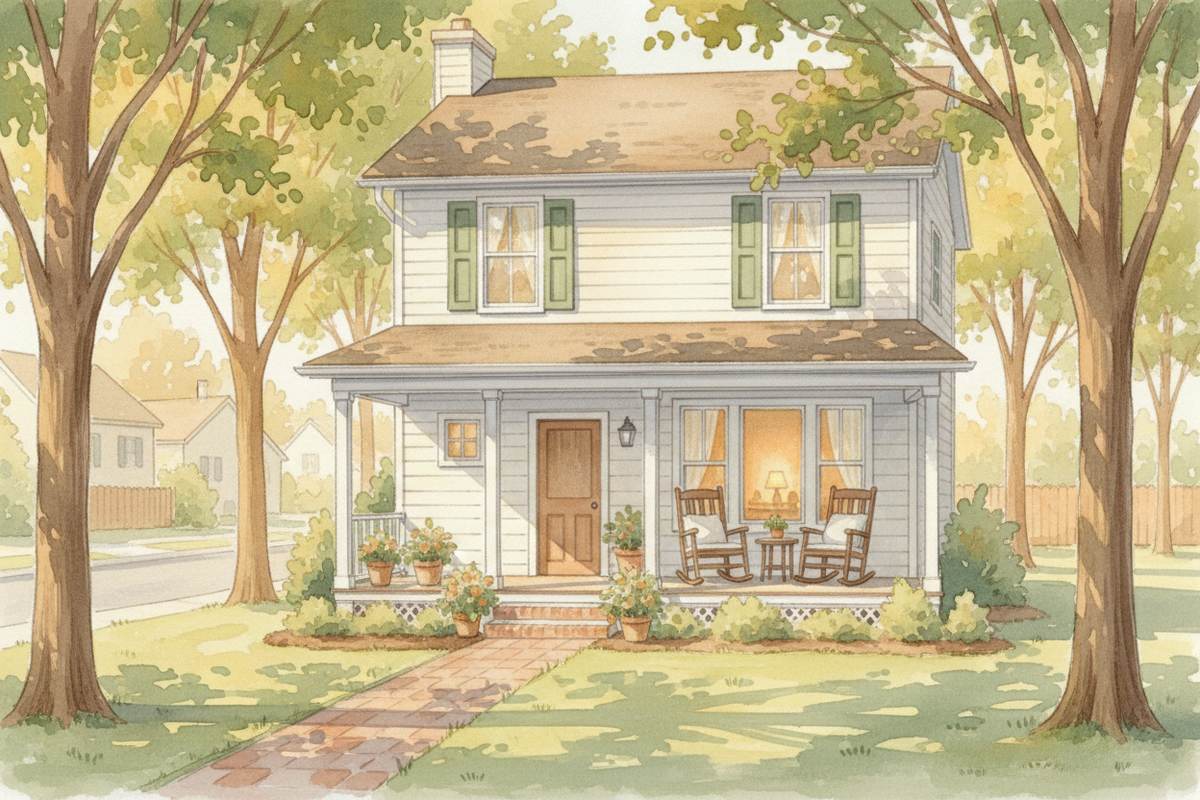
People ask us sometimes why we don't scale up. Why we run two small homes in Troy instead of opening a sixty-bed facility with a lobby and a receptionist and all the trappings that make a place look like it belongs in a brochure.
I used to think the answer was simple — we just prefer it this way. But over the years, I have come to understand that the answer is deeper than preference. It is about what actually works.
When you walk into Herbmoor House or the Daley Home, the first thing you notice is that it feels like someone's house. Because it is. There is a kitchen where meals are cooked fresh every day. There is a living room where residents sit together and watch the news or play cards. There are bedrooms down the hall, not down a long institutional corridor.
We did not design it this way because it looks nice. We designed it this way because of what we observed over years of doing this work.
In a small home, a caregiver does not manage a caseload. She knows that Mr. Howard prefers his coffee black and that he likes to sit by the window after breakfast. She knows that Mrs. Chen gets anxious in the late afternoon and that a walk around the house and a few minutes of conversation usually settles her. These are not things written in a care plan. These are things you learn from being present, every day, in a space small enough that you can actually see the people in front of you.
What Gets Lost at Scale
We have visited larger facilities throughout Oakland County and Macomb County. Many of them are well-run and well-intentioned. But something happens when you scale past a certain point. The systems start to manage the people instead of the other way around. Meals come on trays from a central kitchen. Activities are scheduled in blocks. Staff rotates through wings. It works. But it does not feel like home. And for a person who is already dealing with the disorientation of aging or memory loss, the difference between a place that feels like home and a place that feels like a facility is not a small thing. It is everything.
I learned this the hard way. Early on, I thought the goal was growth — more beds, more revenue, more reach. But the more time I spent in the homes, the more I realized that the thing families were actually responding to, the thing that made residents calm and comfortable and, honestly, happy, was the smallness itself. The fact that someone knew their name. The fact that the house smelled like actual food being cooked in an actual kitchen. The fact that when a family member drove over from Rochester Hills or Bloomfield to visit, they did not have to sign in at a desk and walk past a waiting room. They just came to the door, and someone let them in.
The Trade-Off We Made
Running small homes means we will never be the biggest assisted living provider in Southeast Michigan. It means the margins are tighter and the work is more personal, which also means it is harder to step away from. We are not building a corporation. We are building two homes where people live well.
That is a trade-off we are comfortable with.
Because at the end of the day, the families who come to us are not looking for a brand. They are looking for a place where their mom or their dad will be known and cared for and treated like a person. A small home in a quiet Troy neighborhood can do that in a way that a hundred-bed building simply cannot.
I am not saying bigger is bad. I am saying smaller is what we believe in. And every year we do this work, we believe in it more.
If you are looking for assisted living in the Troy, Michigan area and the idea of a small, residential home sounds right for your family, we would love to show you what we have built. Call us at (248) 266-2738 or email us at troygoldenpines@gmail.com to schedule a tour.